The birth of a legend
The origin of the PUMA White Hunter
1956 – East Africa. PUMA is in negotiations with the EAPHA – the East African Professional Hunters Association. Some members of this association were legends in their own right, such as Philip Percival. He became known as a big-game hunter in colonial Kenya and as a hunting guide for Theodore Roosevelt and Ernest Hemingway. The driving force behind the collaboration was the then-head of the PUMA factory, Oswald von Frankenberg und Ludwigsdorf . After the Second World War, he converted production to hunting knives and established the crucial contact in East Africa.
Together they developed a knife that would set a new standard for hunting and outdoor knives.

one tool for everything
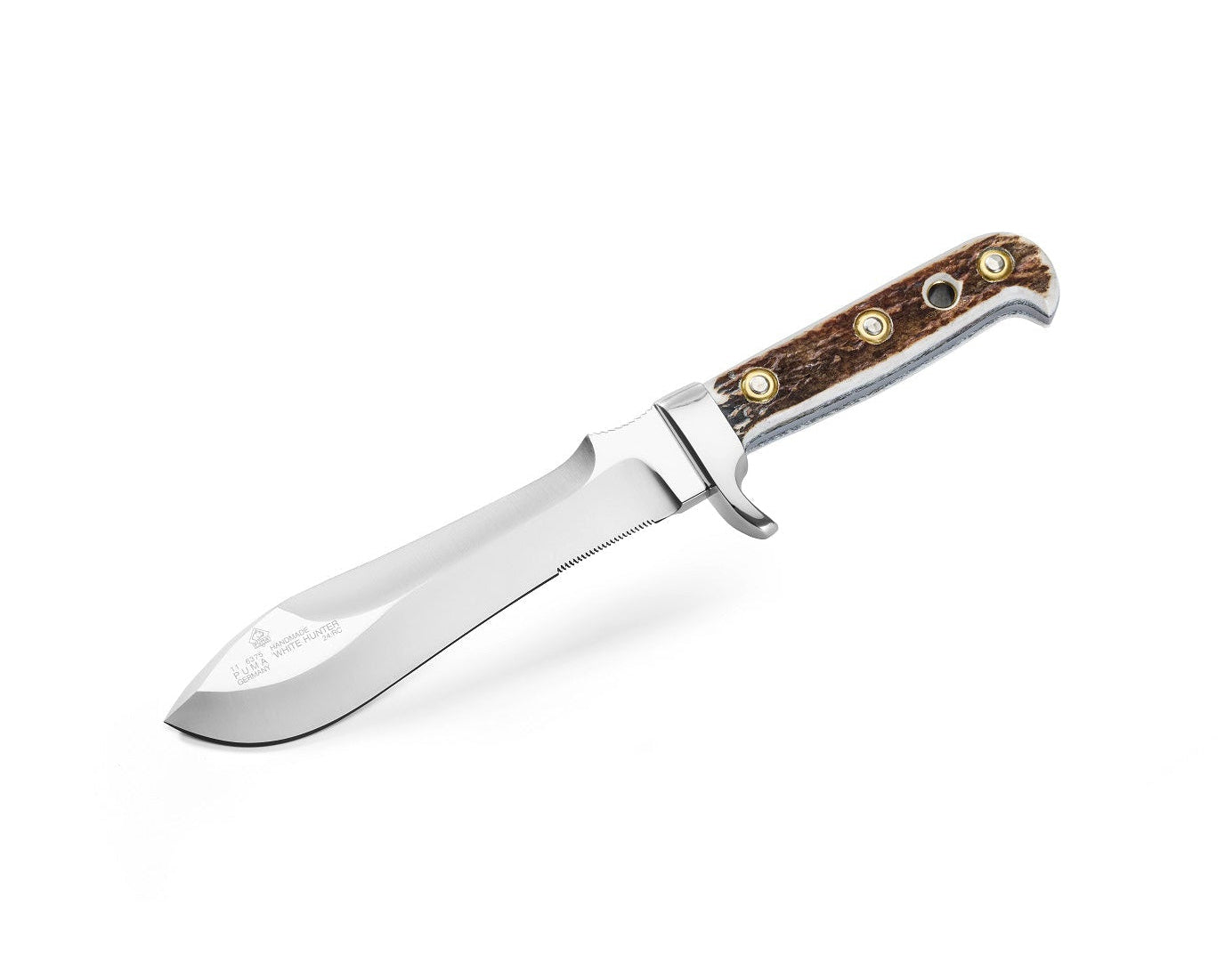
Hermann Heck, the technical director of production, designed a blade shape that was completely new at the time.
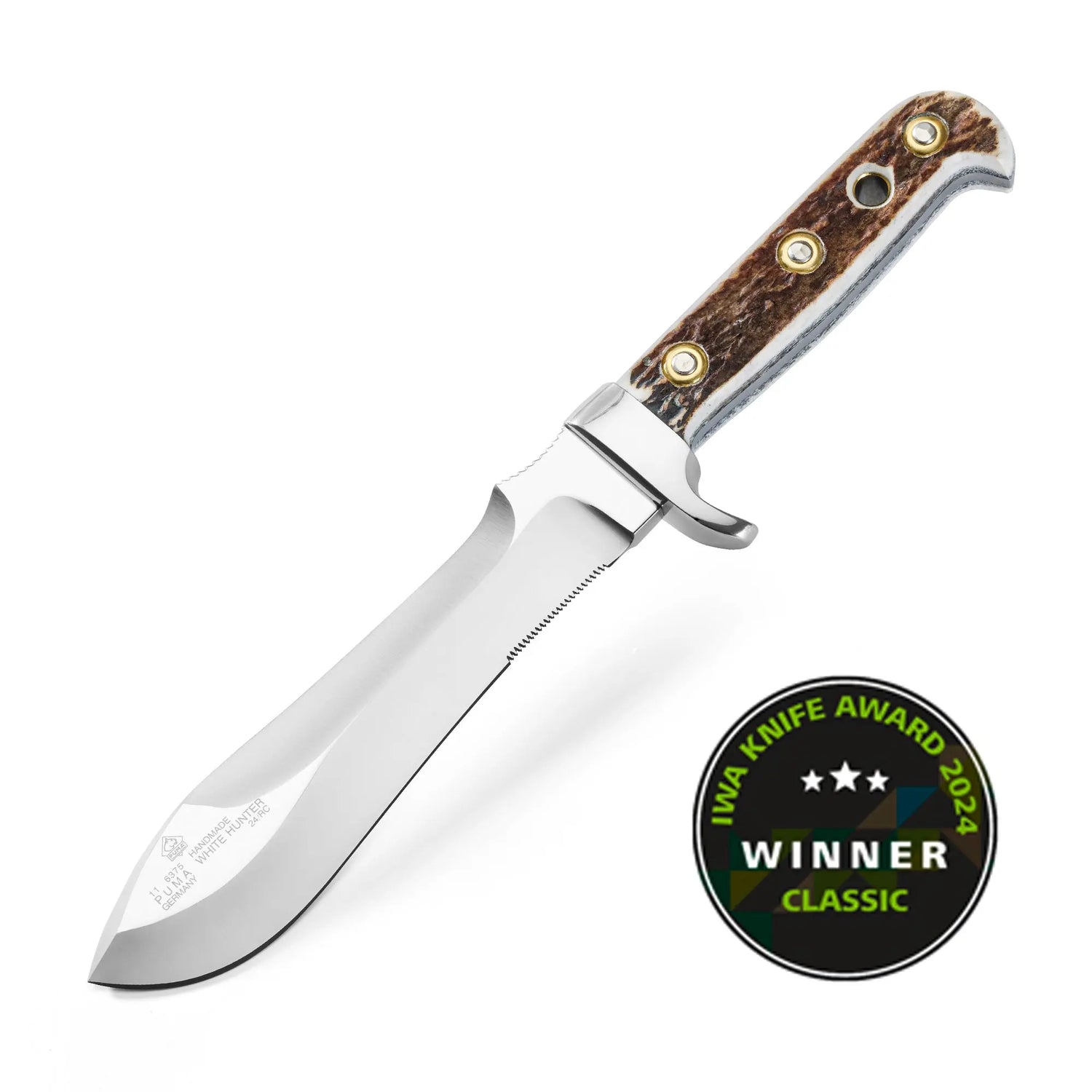
The coarse tip is robust enough to open cans or pry off bottle caps. Due to the center of gravity at the blade tip, the knife develops tremendous striking power.
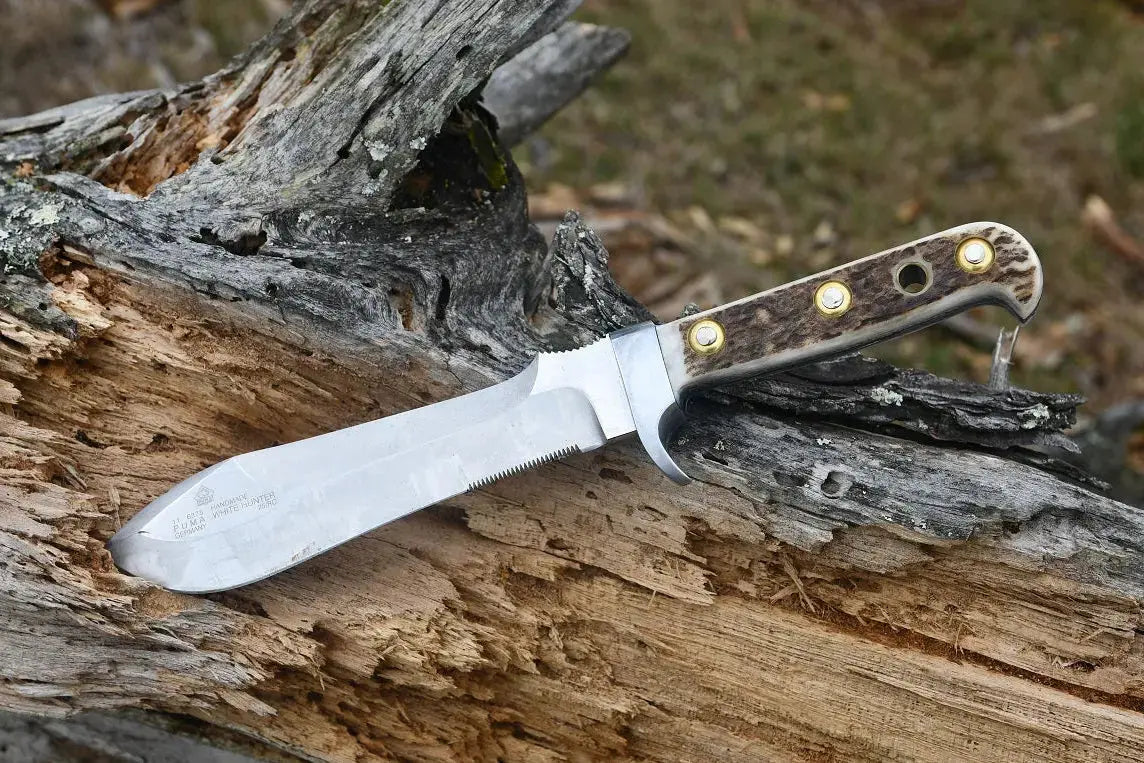
A wide blade spine - designed for driving nails or tent pegs. The blade is grinded into a long axe edge in the middle of the spine . Ideal for rough work to protect the normal edge. It can be used to chop brushwood, split firewood, or break bones.
Grooved thumb rest and pronounced crossguard - both ensure safe use and handling.
The cutting edge is divided into two sections: Two-thirds of the blade are smooth. The curved shape allows for powerful, long cuts. The rear third has serrated edges. Ideal for cutting green branches, animal hides, or similar materials.

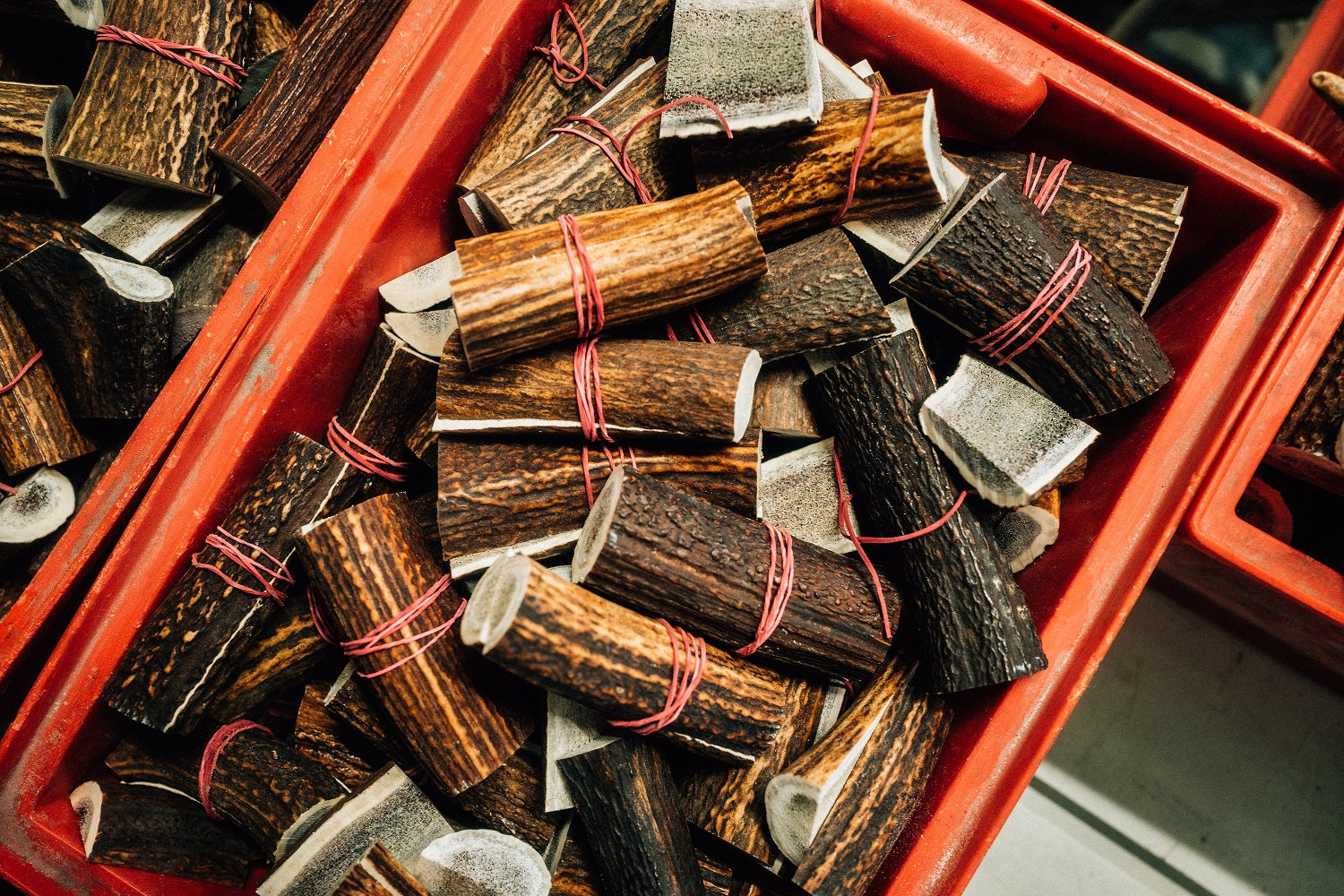
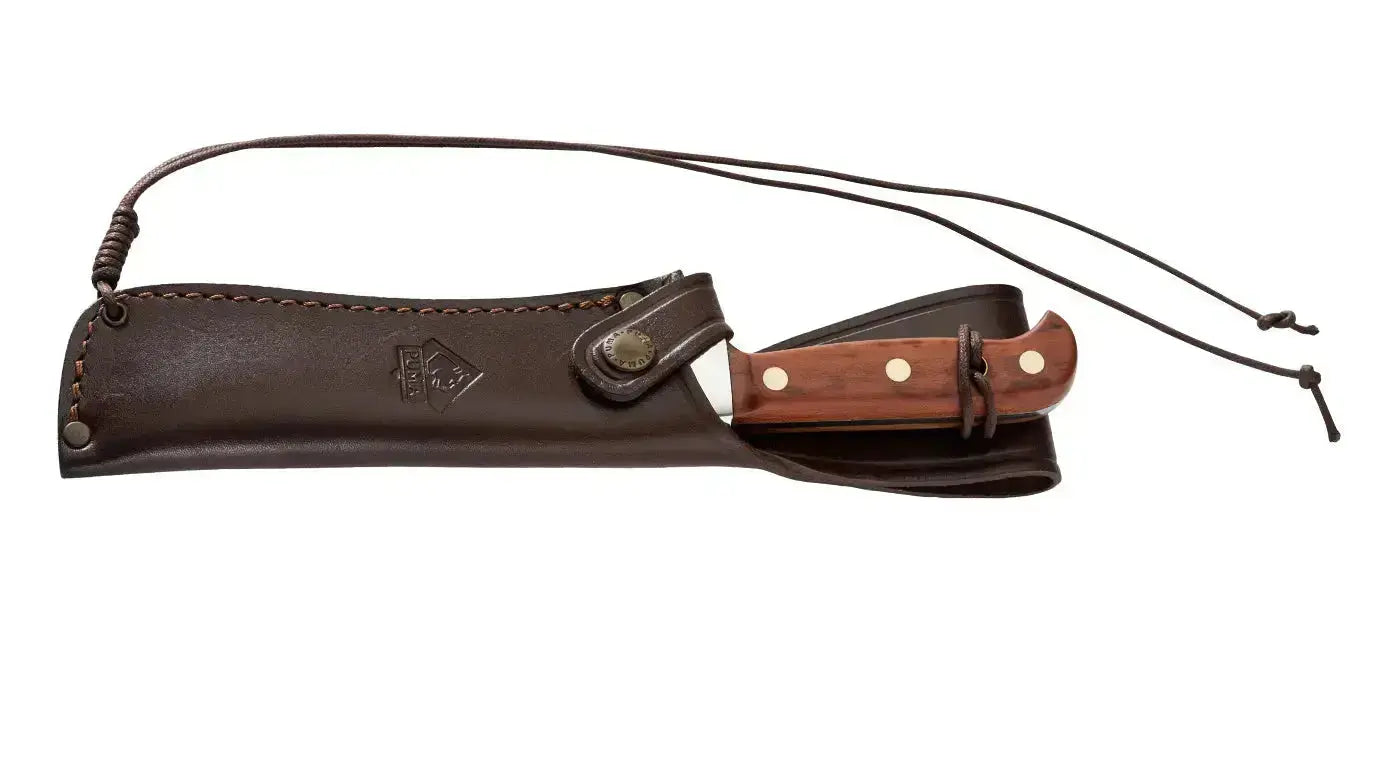
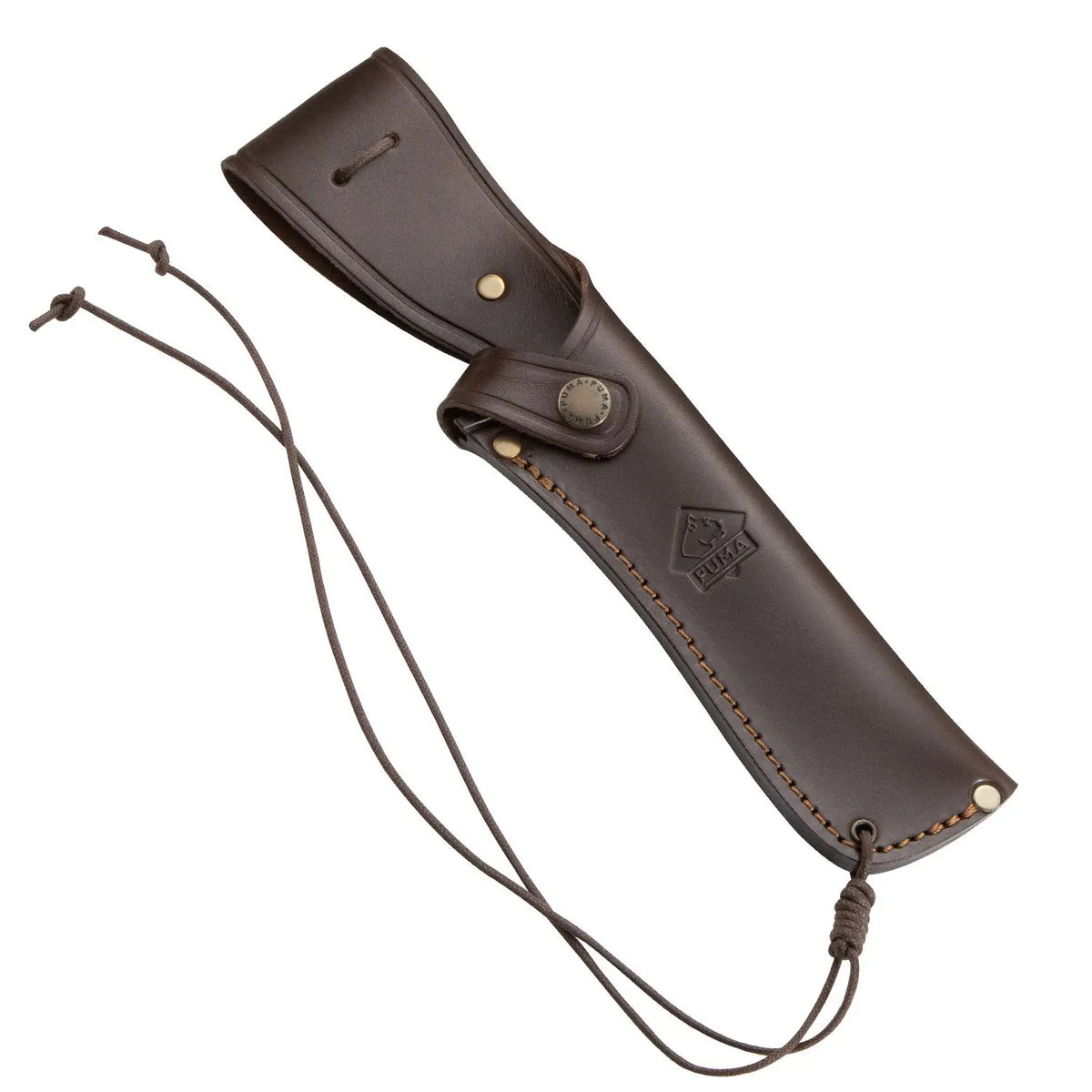
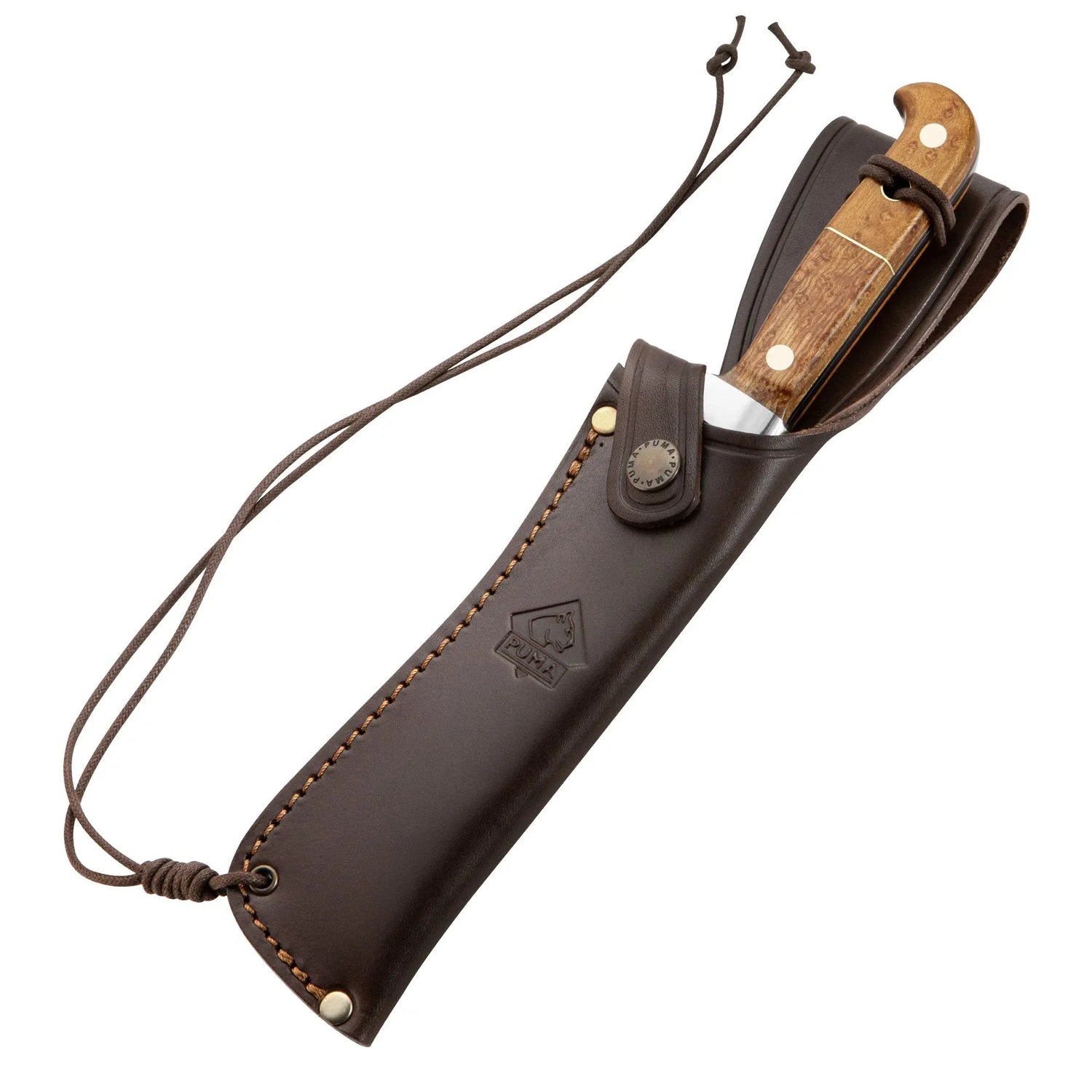
The handle of the White Hunter is made of staghorn. This horn used to come from Indian sambar deer (Rusa unicolor). Due to changes in export regulations, modern knives are made with European red deer horn, which is durable and easy to care for. The rough, uneven surface ensures a secure grip even in cold and wet conditions. The handle features a lanyard hole for attaching a safety strap. It also serves as a holder for the strap of the patented PUMA leather sheath, which securely prevents the knife from falling out.
Did you know? Horn is a renewable natural material that deer naturally regenerate every year. Deer antlers aren't worn permanently; they are shed annually and then regrown. Therefore, animals don't have to die to obtain their horn. The shed antlers are collected from the forest each year and thus find their way into our production.
Upcycling at PUMA: We also process antlers from old hunting trophies!


The White Hunter as a movie star
Icon of the Winnetou films 1962-1968
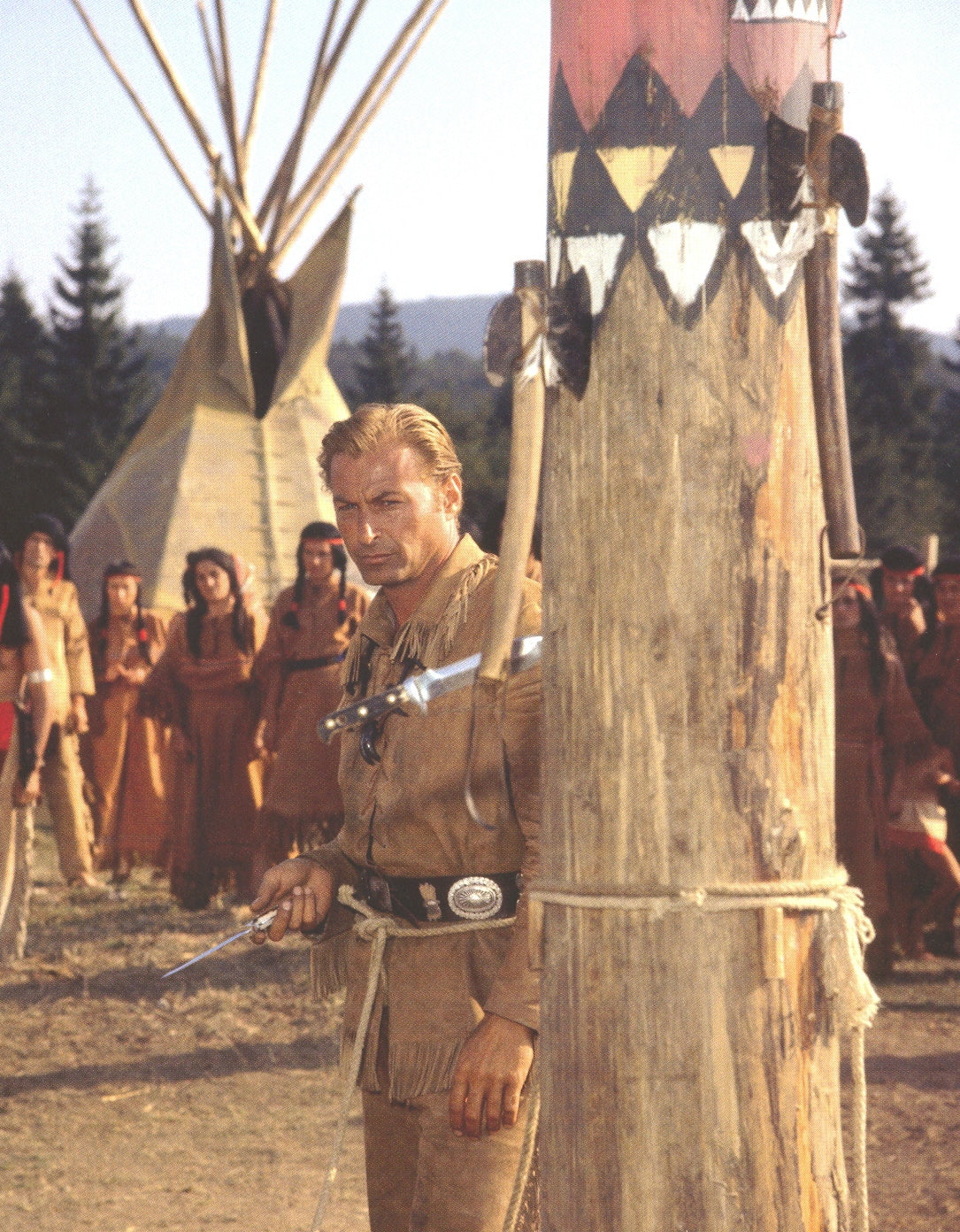
The Winnetou film series further boosted the White Hunter's fame. PUMA provided approximately 20 pairs as props for filming, ensuring the model's prominent presence in the movies. Old Shatterhand, portrayed by Lex Barker, wore it prominently, making it a symbol of the Karl May film adaptations and adventure films.
The knife made its first appearance in "Treasure of Silver Lake" (1962), directed by Harald Reinl, and was thus present from the very beginning of the Rialto film adaptations starring Pierre Brice as Winnetou. Lex Barker used the knife in gripping fight scenes and when interpreting maps. The White Hunter was intended as a replacement for the typical Bowie knives. This role catapulted the Solingen-made product to cult status, sparking enthusiasm and longing for this model in an entire generation. The White Hunter's use wasn't limited to this film: In "Apache Gold" (1963) and "Winnetou and Old Firehand" (1966), characters like Pierre Brice as Winnetou and Todd Armstrong also employed it in action-packed moments. It also became Old Shatterhand's signature hunting and fighting knife in " The Oil Prince " and other Rialto films. Today, it fascinates collectors and fans alike as a piece of German film history
Why is it called
Automesser (Car knife)?
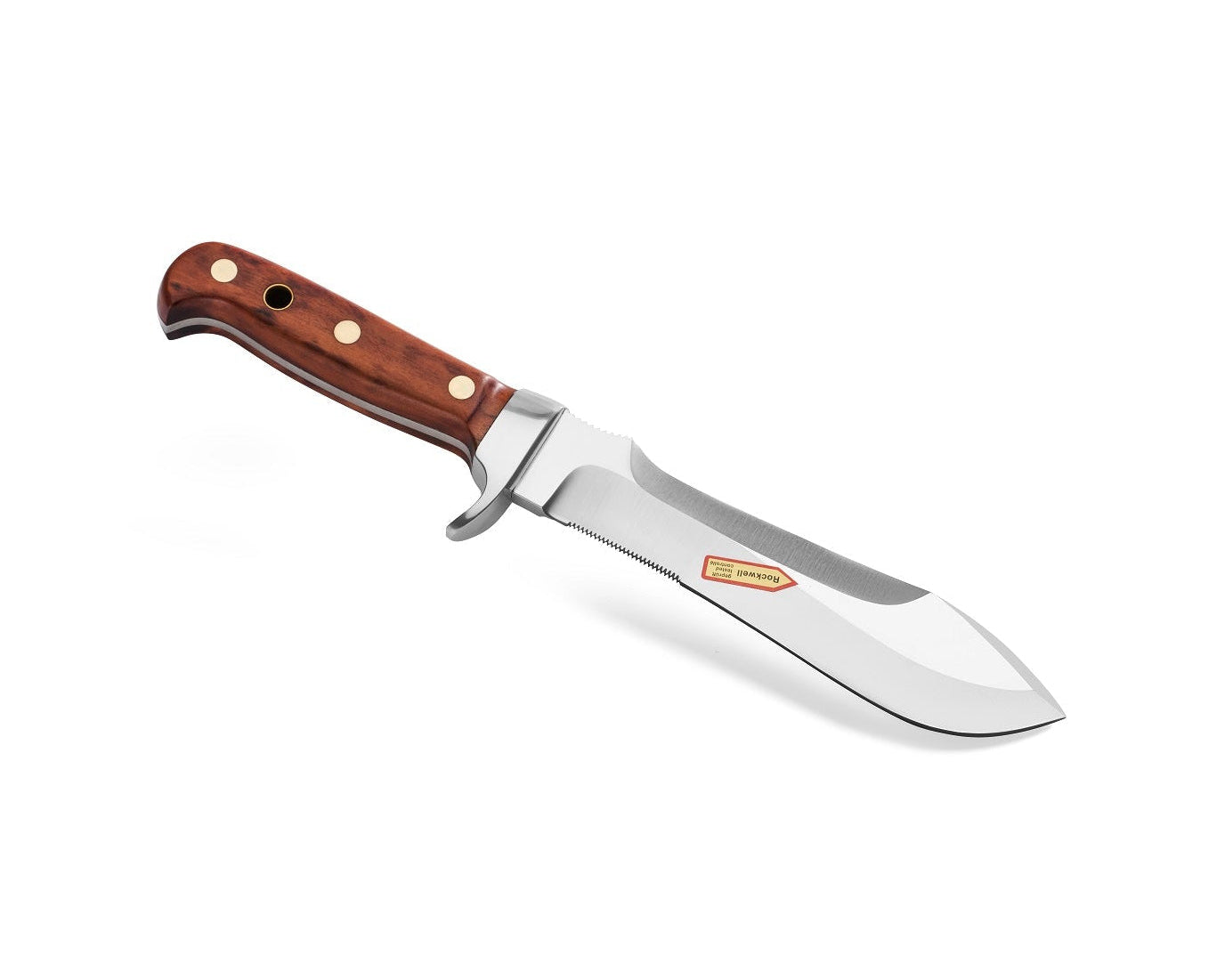
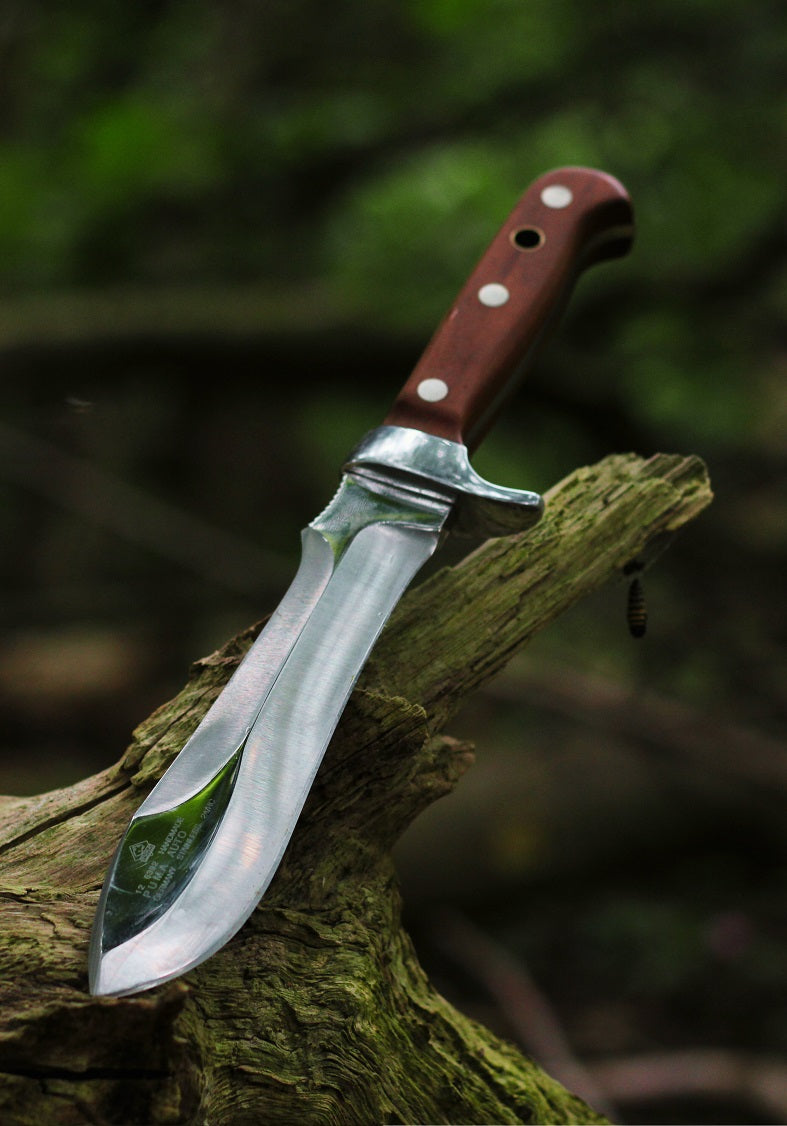
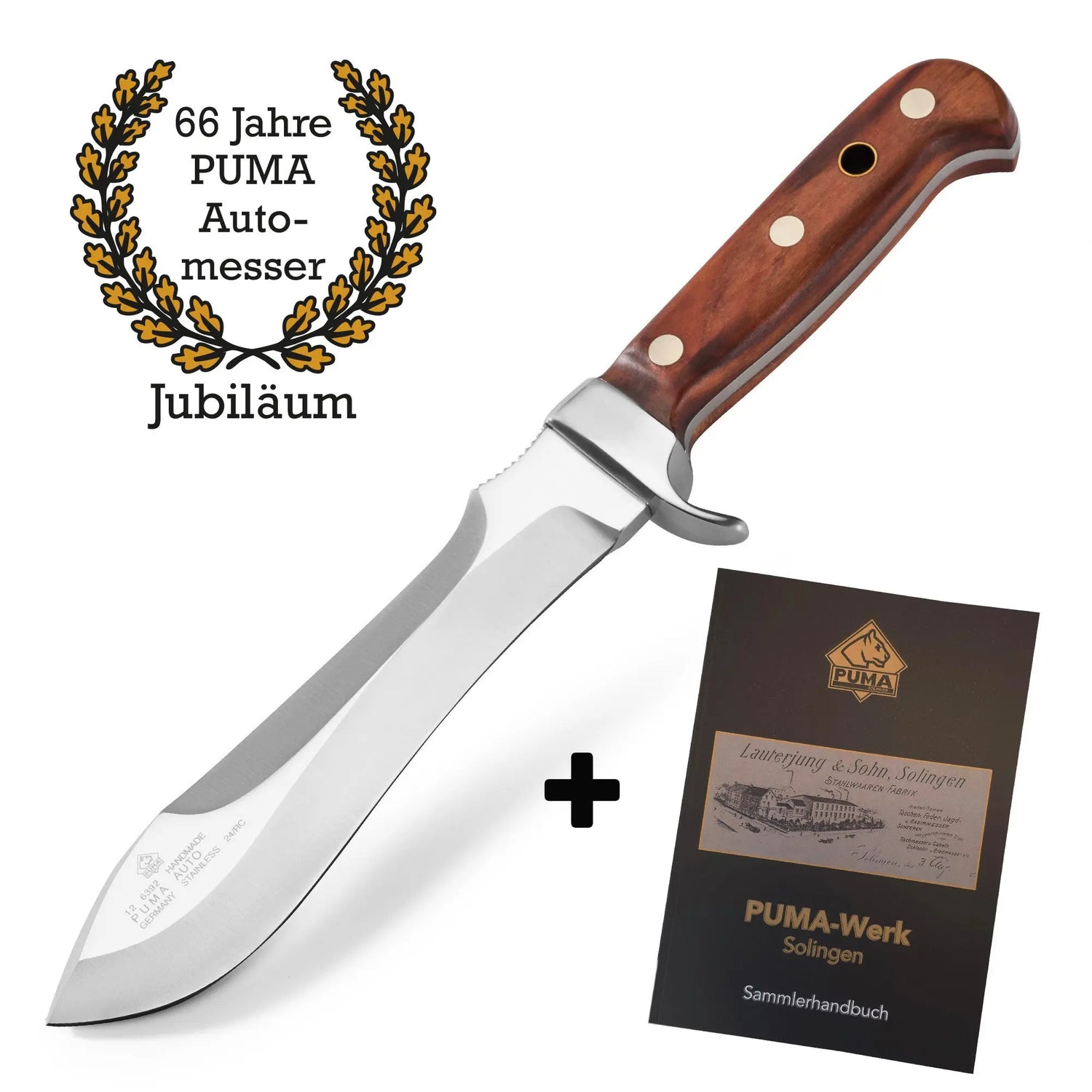
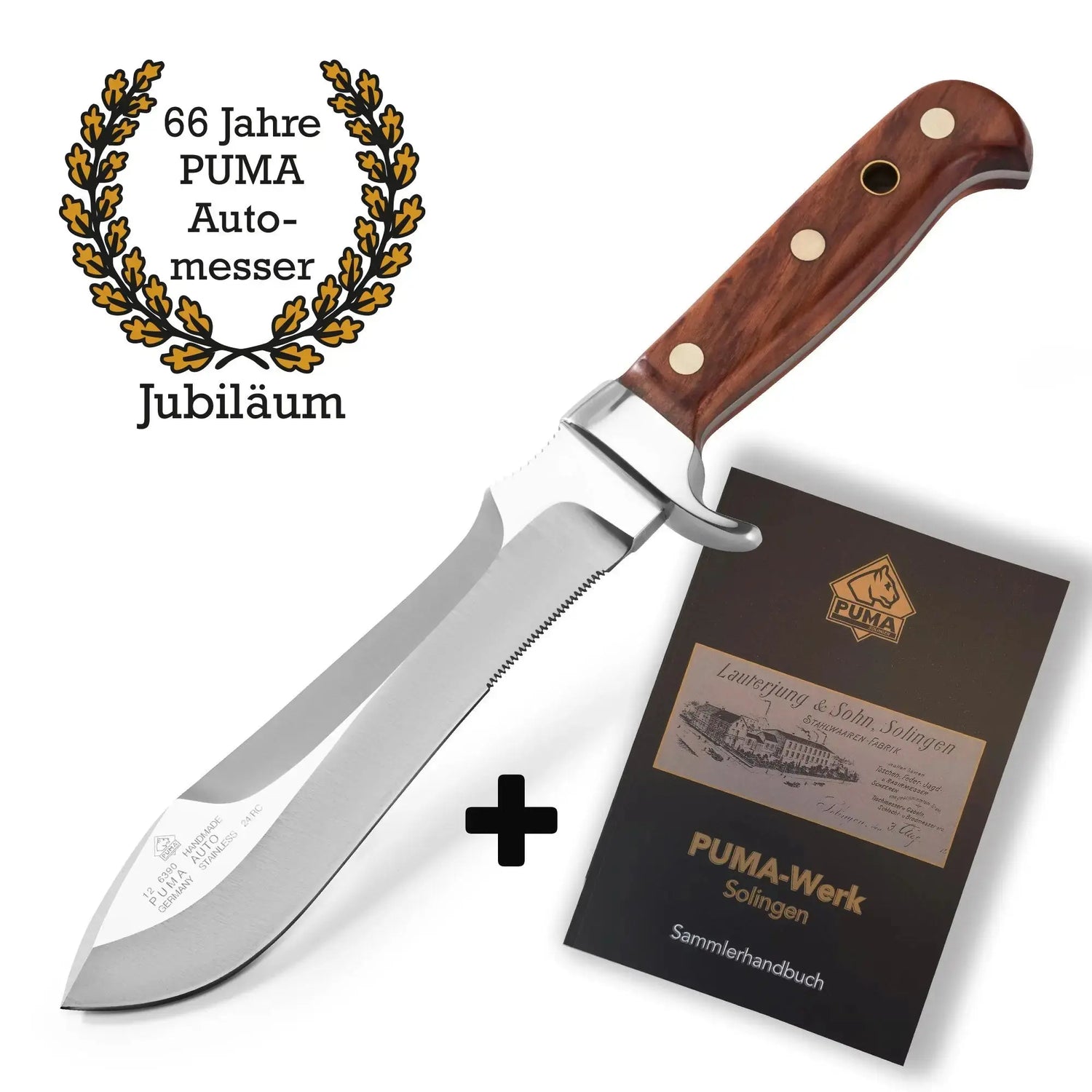
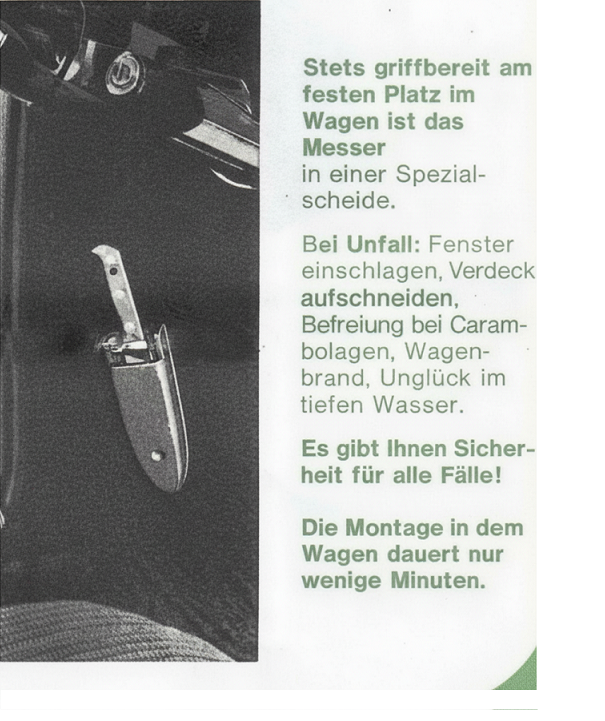
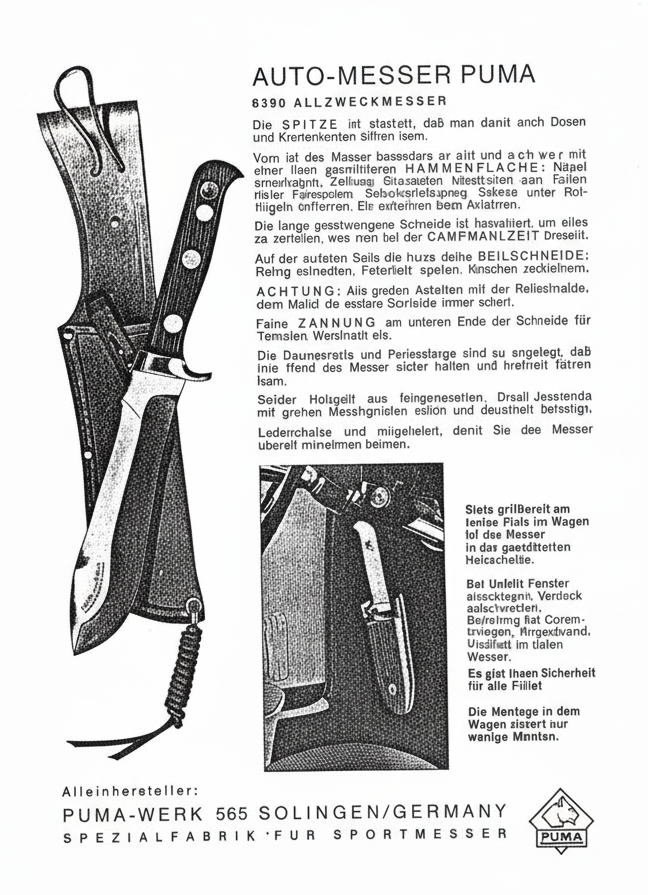
The PUMA Automesser is a direct successor to the "White Hunter" model and differs primarily in its handle material: unlike the White Hunter, it uses wood. The types of wood have varied over the years; initially, African jacaranda wood was used, and today European plum wood is employed.
The name "Automesser" (car knife) stems from the knife's marketing. In the early 1960s, it wasn't advertised as a hunting knife, but rather as an emergency tool for motorists and travelers. The term "Automesser" emphasized the tool's intended use for breakdowns, accidents, or outdoor emergencies involving a car – perfectly suited to the burgeoning automotive culture of the time. Originally, the knife was supplied with a special holder for mounting it on the inside of the vehicle.


The pilot knife
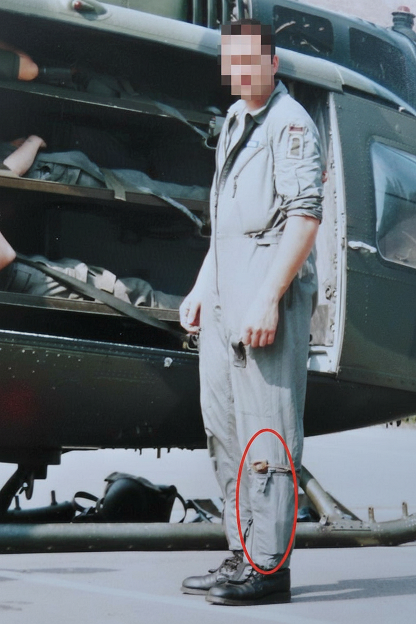
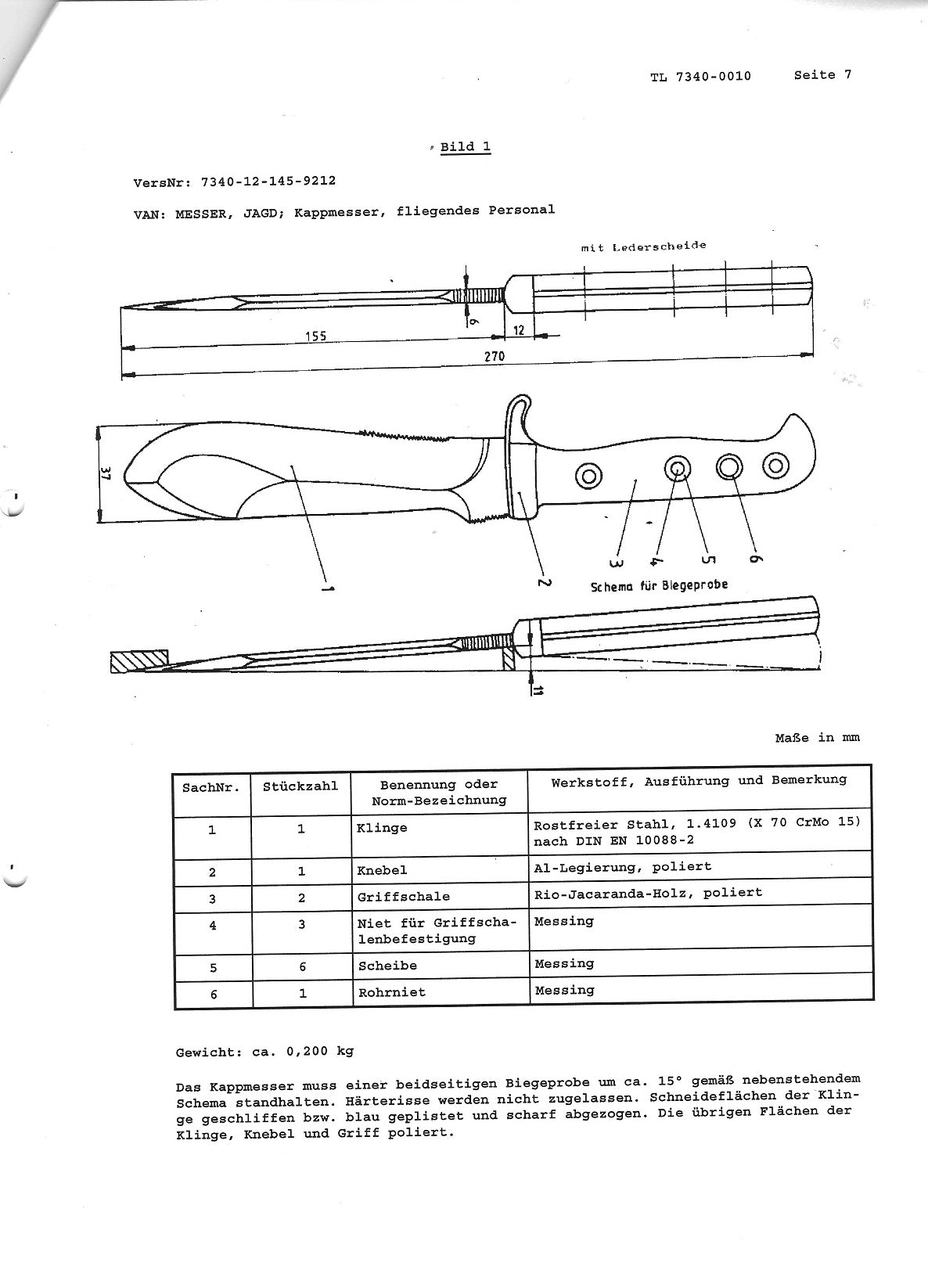
From 1967, the German Federal Armed Forces (Bundeswehr) introduced the Automesser as the "pilot's knife" (also known as a survival knife) for flight personnel, in accordance with Technical Delivery Specification TL 7340-0010. This special variant, approximately 200-300 units, was marked with the inscription "BUND" on the ricasso. These knives underwent rigorous bending and stress tests as part of the acceptance procedures to ensure compliance with military quality requirements. The accompanying leather sheath was specially reinforced and fitted with additional rivets to prevent it from cutting through under extreme forces, such as those encountered during ejection. It was originally procured for the crews of the F-104G Starfighter to enable self-rescue measures in the event of a crash or ejection, such as cutting seatbelts , extricating themselves from debris , and surviving on the ground in SERE (Survival, Evasion, Resistance, Escape) situations.
With the introduction of the Panavia Tornado in 1981, these knives were also issued to its pilots and weapon systems officers. The Automesser was considered a robust, practical tool and was also used by some other units, including helicopter pilots , long-range reconnaissance troops , and special forces, who relied on multifunctional and compact equipment.
The knife was typically carried in a special pocket of the flight suit or on the pilot's thigh for quick access in an emergency. Regular delivery of these knives to the German Armed Forces ended in 1983. Today, these knives are sought-after collector's items.


Police and GSG9
Special police units like the SEK (Special Deployment Commandos) used the PUMA Automesser for raids, hostage, and self-defense situations. From 1973 onward, it was recommended to special operations commanders and marksmen as a versatile tool for dynamic scenarios. Thanks to its robust construction, it proved to be particularly reliable. The top-heavy blade with its axe edge and serrations was ideally suited for cutting through straps and barriers, as well as for improvised tool applications in confined spaces.
In the early 1970s, the Grenzschutzgruppe 9 (German Federal Police's Border Guard Group 9) or GSG9 ordered approximately 30 specially adapted prototype knives with blackened blades , lacquered aluminum bolsters , and extra-dark jacaranda wood scales. These were optimized for tactical operations and came with a NATO-green, textured leather sheath. Until the mid-1980s, the standard-issue Automesser with a NATO-green leather sheath remained part of their equipment, as evidenced by historical photographs of officers with knives attached to their belts.
PUMA produced between 1,000 and 2,000 units of the knife for airport fire brigades, featuring a special hook blade (seatbelt knife edge) on the spine, according to order number 4210-12-177-2996 . This tool was primarily used for rescues from wrecked or crashed vehicles by cutting seatbelts and ropes. This variant underscored the adaptability of the car knife for official use.

Special edition for the 240th anniversary
The White Hunter 240
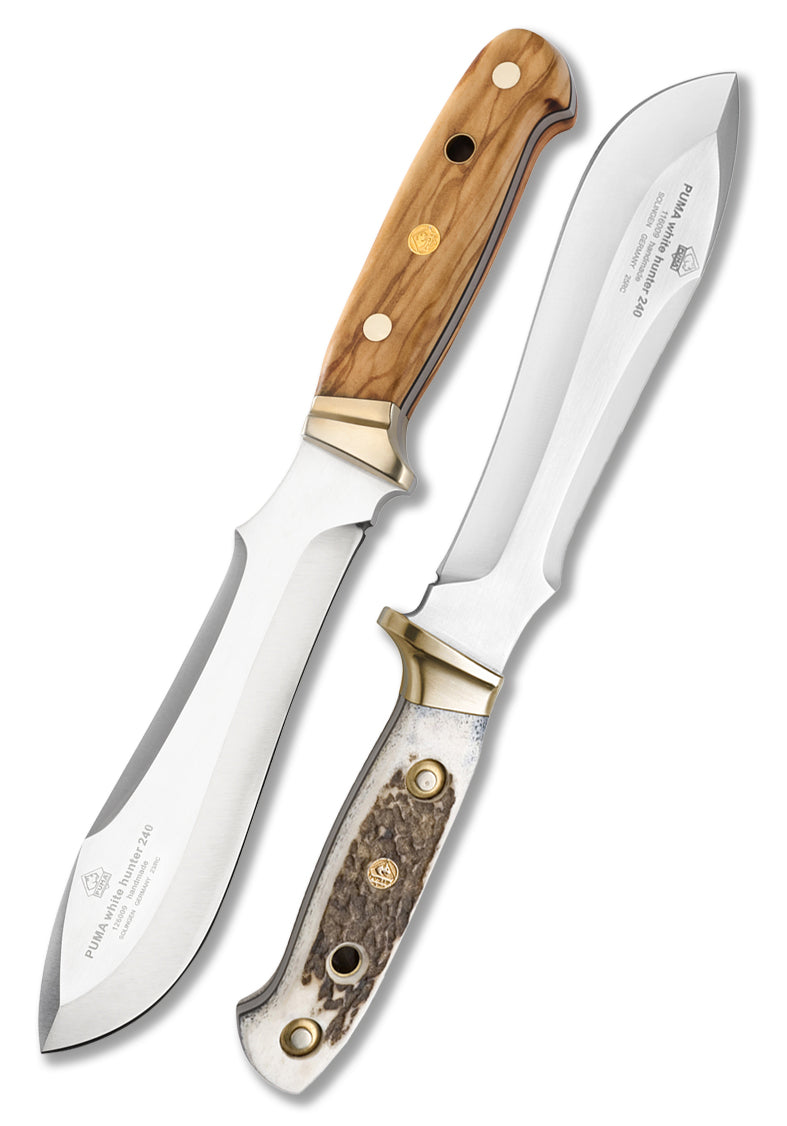
The PUMA White Hunter 240 was created as a modern anniversary edition for PUMA's 240th anniversary in 2009 and represents an ergonomically optimized reinterpretation of the classic. The design is by HP Knoop. Heinz-Peter Knoop is a well-known German knife designer who worked for PUMA and, in addition to the White Hunter 240, also developed the famous " PUMA Rüdemann ".
The new design featured a reworked handle for improved ergonomics, but largely retained the universal blade with its axe edge and robust tip to ensure durability for hunting, outdoor activities, and survival. Unlike the White Hunter, the 240 has no serrations on the blade and no thumb ramp on the spine.
Further differences between the 240 and the standard White Hunter model include the elegant nickel silver bolsters and the shortened guard. This version is optionally available with handle scales made of staghorn and olive wood.


Automesser
Without sawtooth teeth
The outdoor market has changed dramatically in recent years. Bushcraft, survival , and nature-based leisure activities (outdoors) are experiencing a real boom. This has led to new priorities for a knife, which should be versatile, robust, and precise. Many users wanted a tool that was suitable not only for cutting but also for carving and fine work.
It was precisely from this development that the idea arose to offer the classic car knife in a new, adapted form – without serrations . While the characteristic serrations were originally a distinctive feature of the model, practical experience showed that many users removed them for use outdoors.
The reason: A smooth edge is not only easier to resharpen, but also allows for significantly finer work such as carving, sharpening wood, making tinder, or precisely cutting food.
The new version of the Automesser addresses this need. It is ideal for bushcrafters, nature lovers, and anyone who values a robust all-rounder for outdoor use.


PUMA Automesser, without serrations

Awards
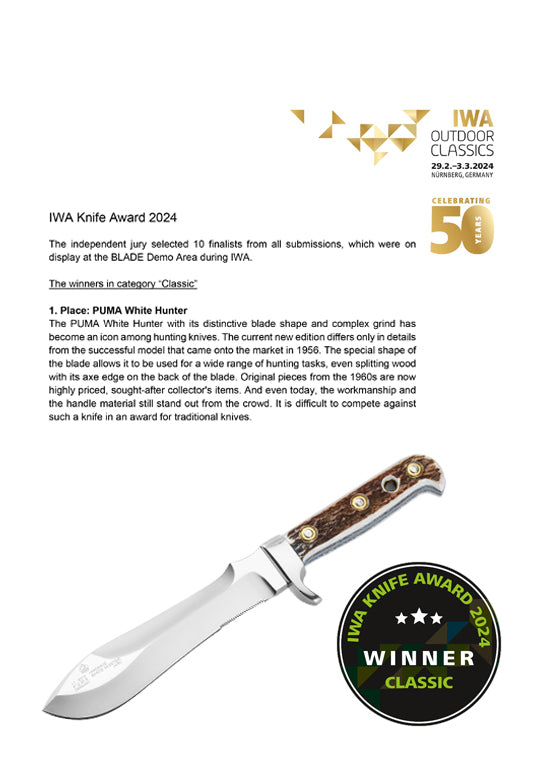
Even today, these knives maintain their place among the best cutting tools on the market. The White Hunter was voted Classic of the Year 2024 at the IWA trade fair, successfully beating out its competitors. The Automesser (without serrations) achieved an excellent second place – an impressive 65 years after its market launch. Readers of the Messermagazin (Germanys biggest knife journal) voted it one of the best fixed-blade knives of 2025, outperforming numerous competitors.
All White Hunter knive versions, Automesser & accessories


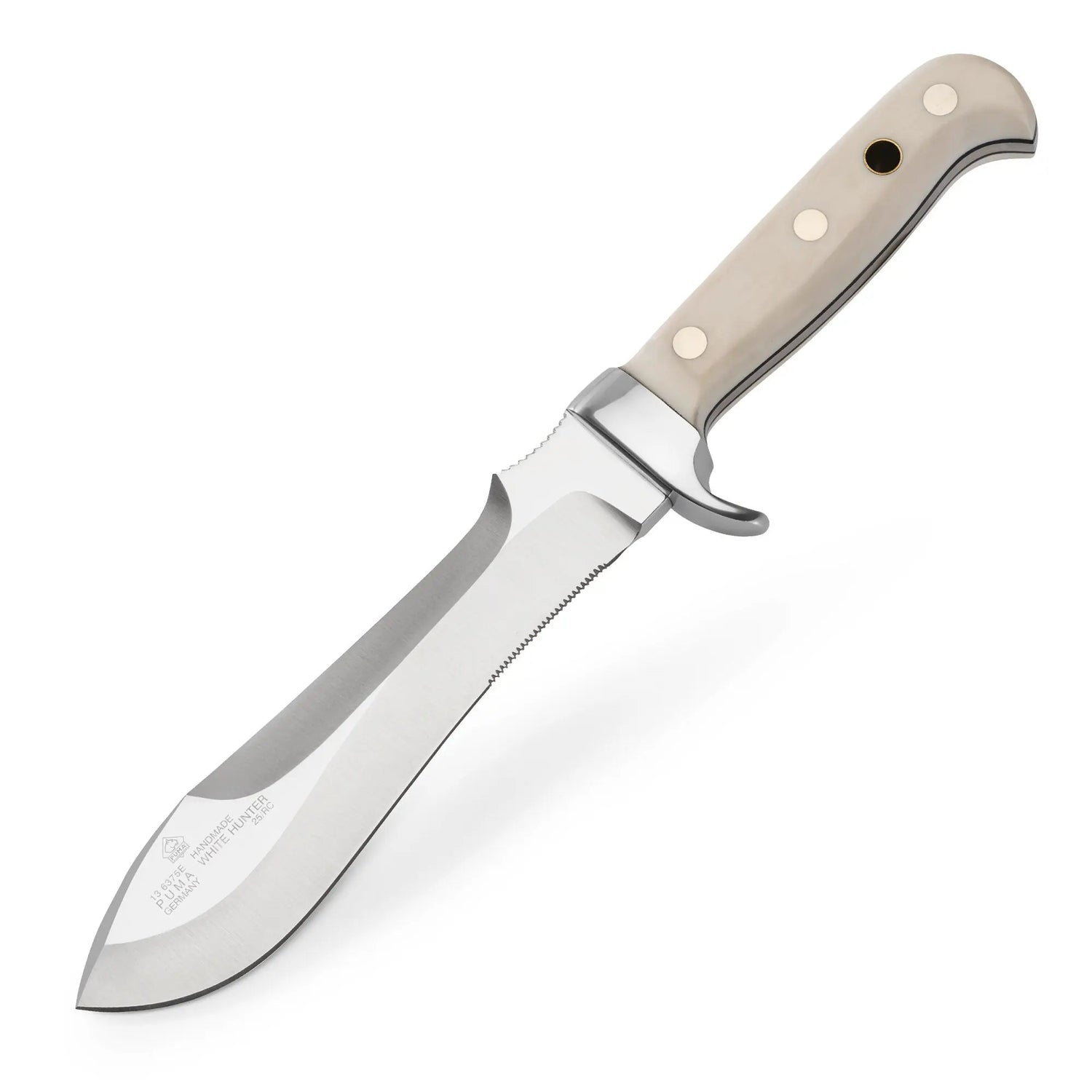
PUMA white hunter


PUMA Automesser


PUMA Automesser, without serrations


PUMA white hunter, buffalo horn

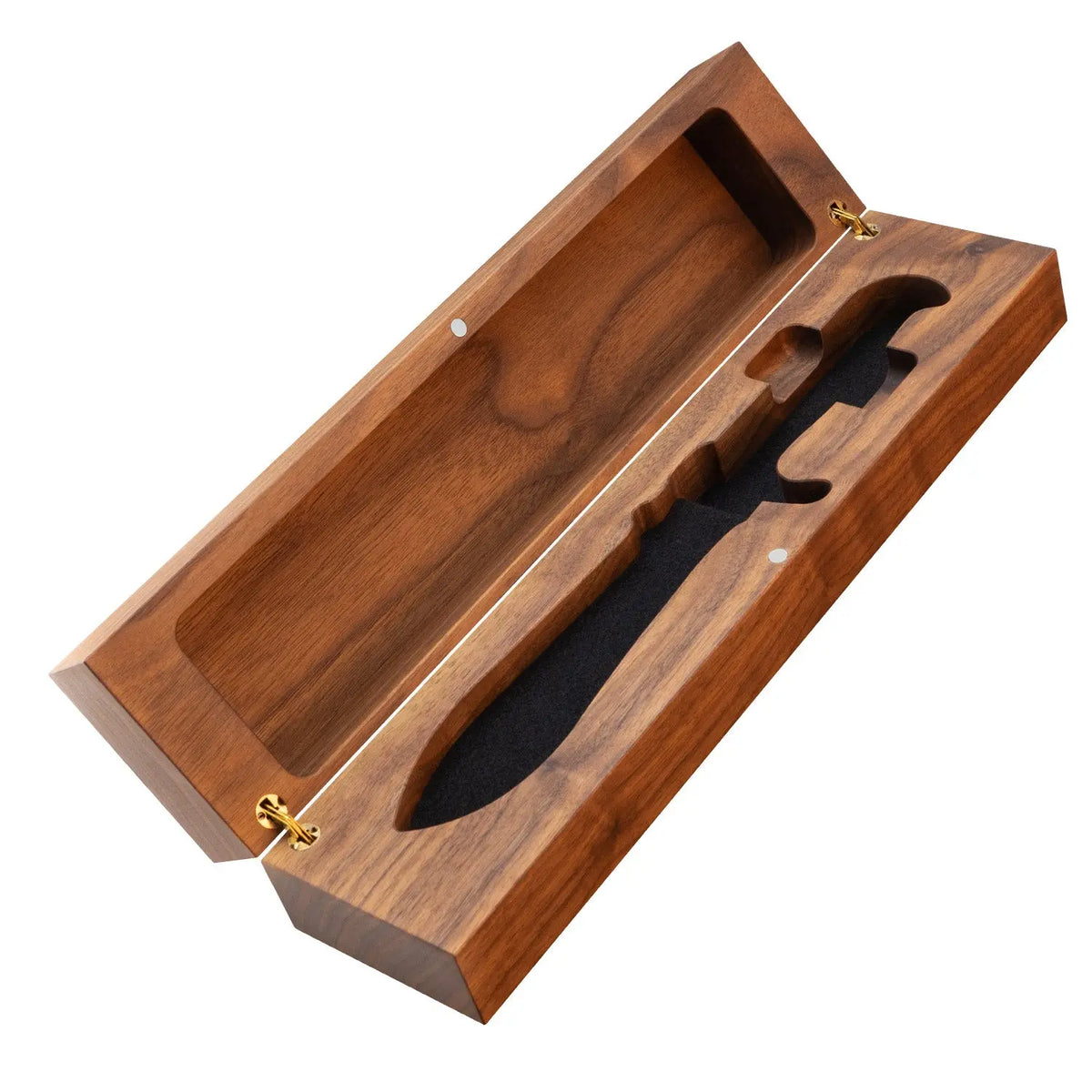
PUMA white hunter, elephant with wooden gift box
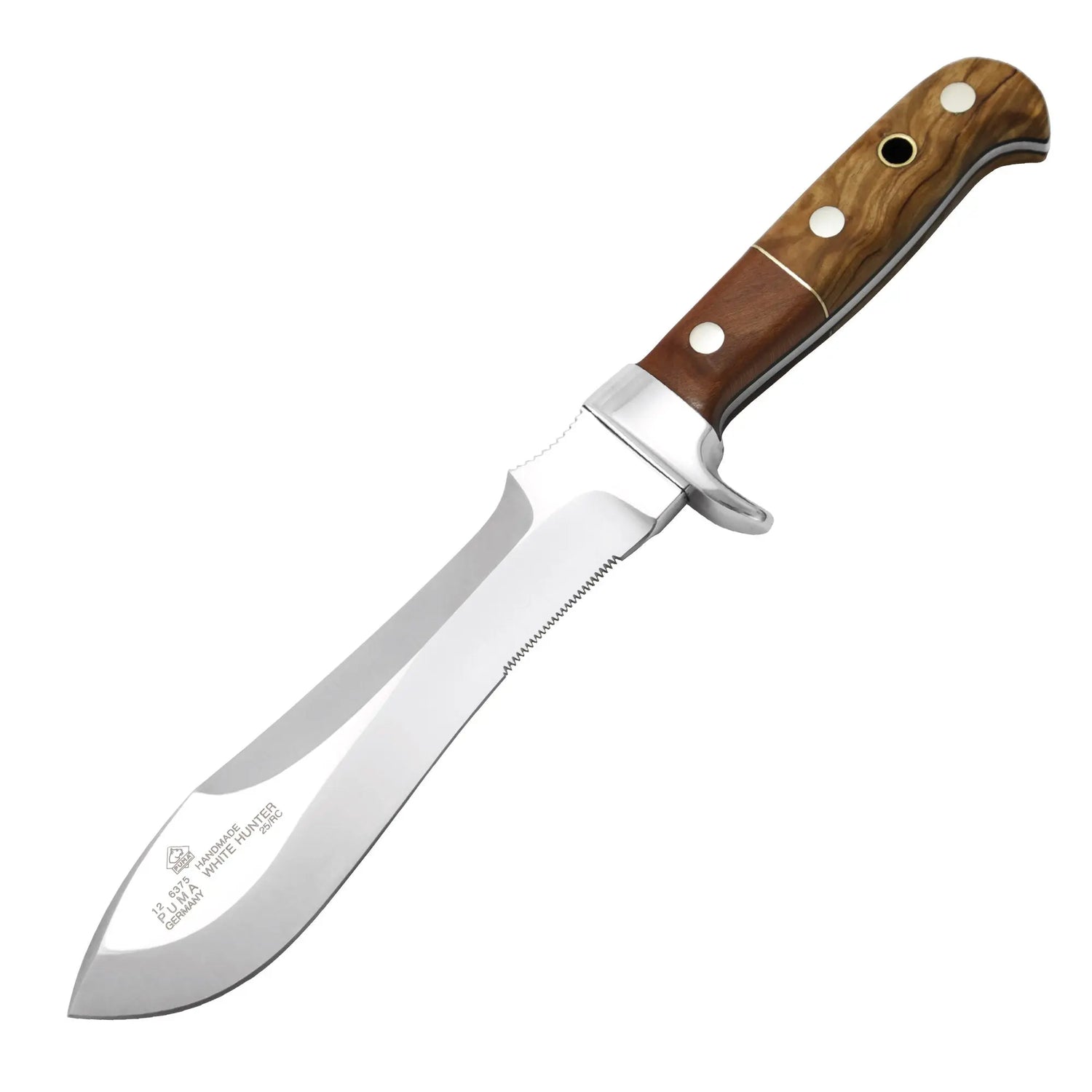
PUMA white hunter, lion
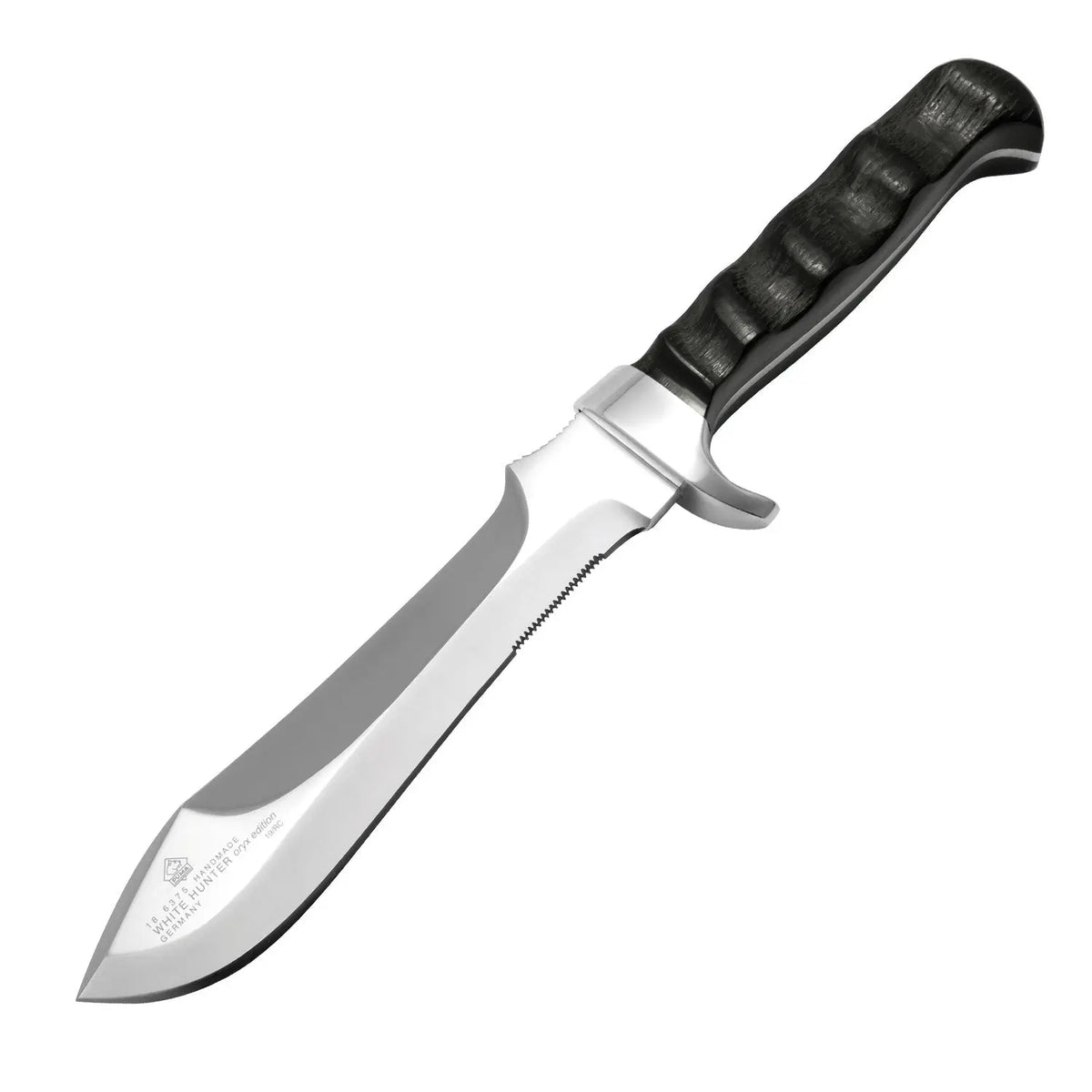

PUMA white hunter oryx edition


PUMA white hunter 240, deer horn
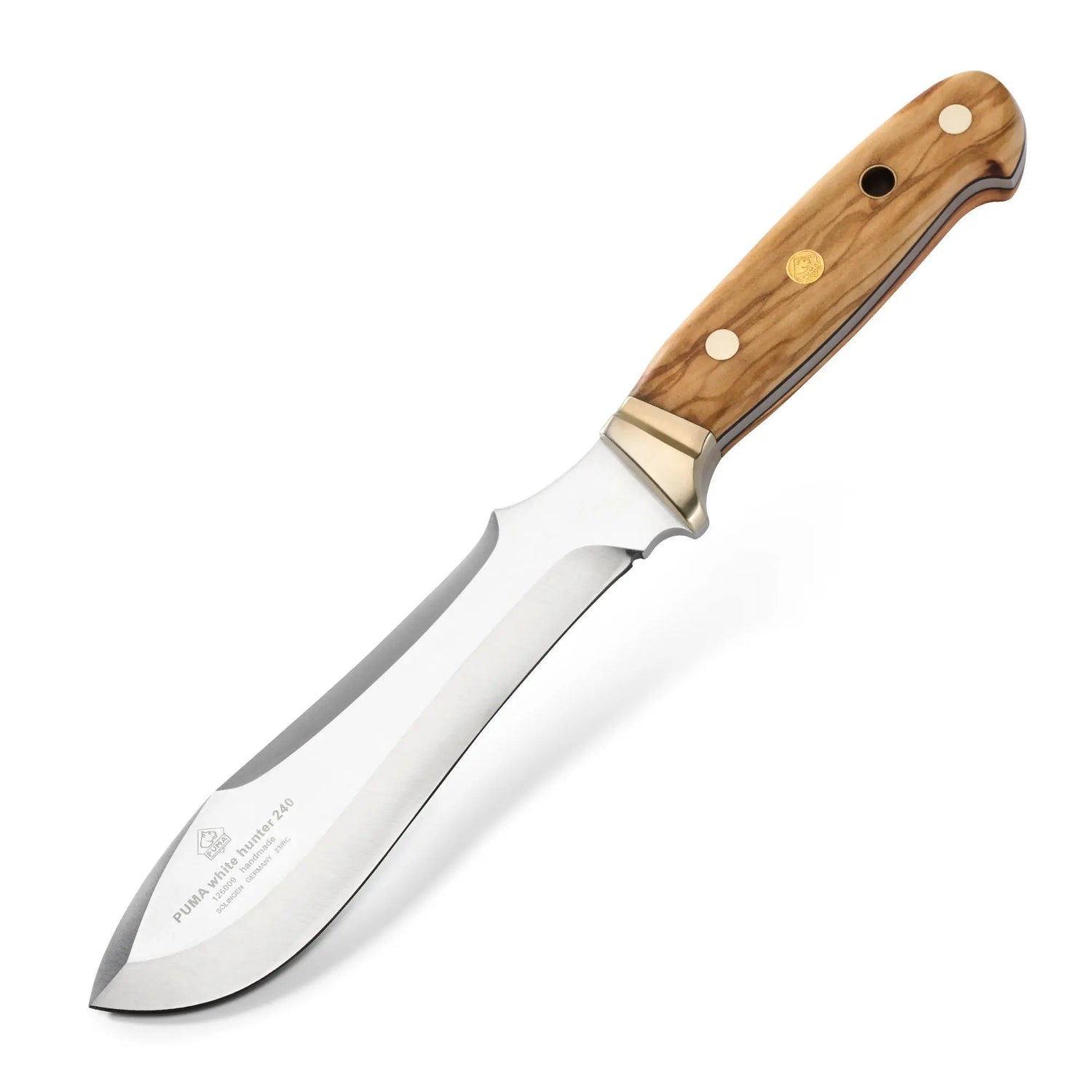
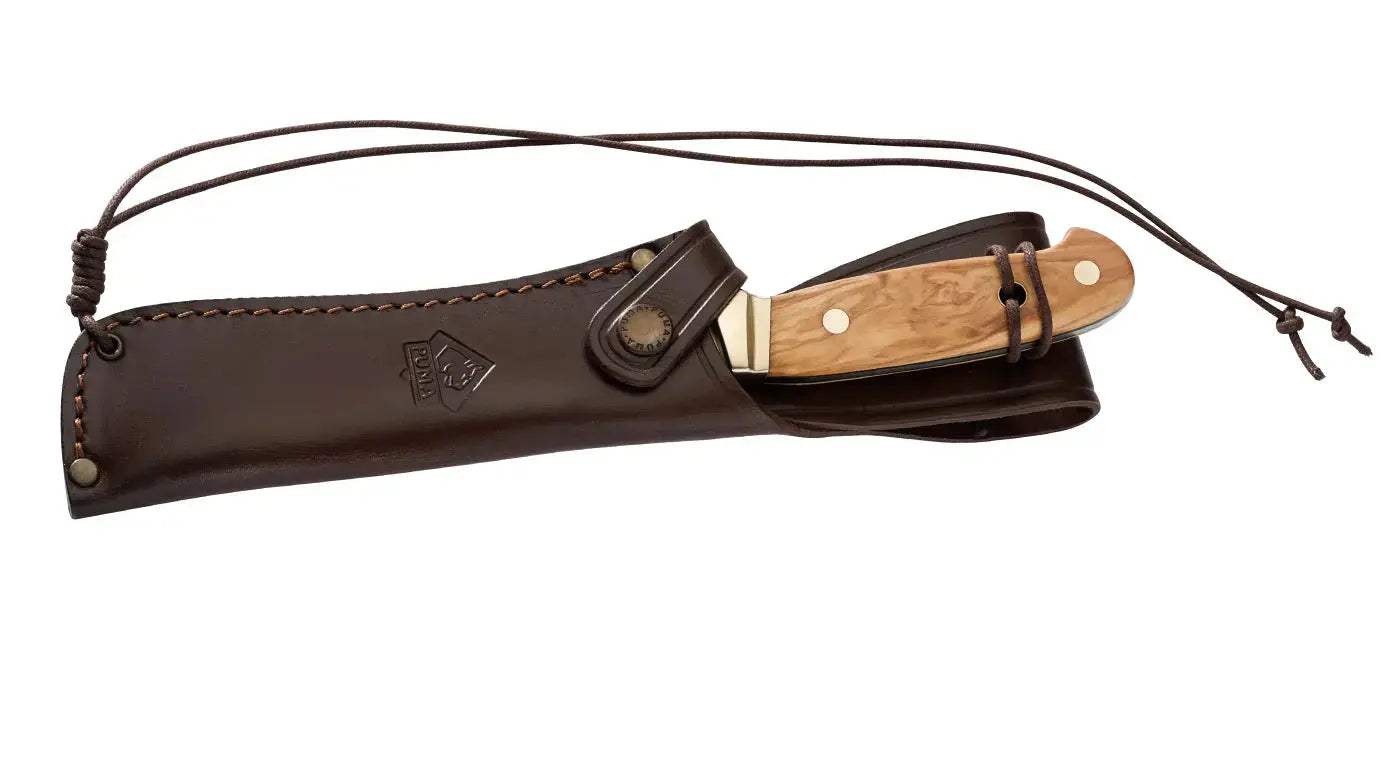
PUMA white hunter 240, olive wood


PUMA white hunter - IWA Edition


PUMA IP white hunter 240, olive


PUMA mini white hunter (miniature knife)
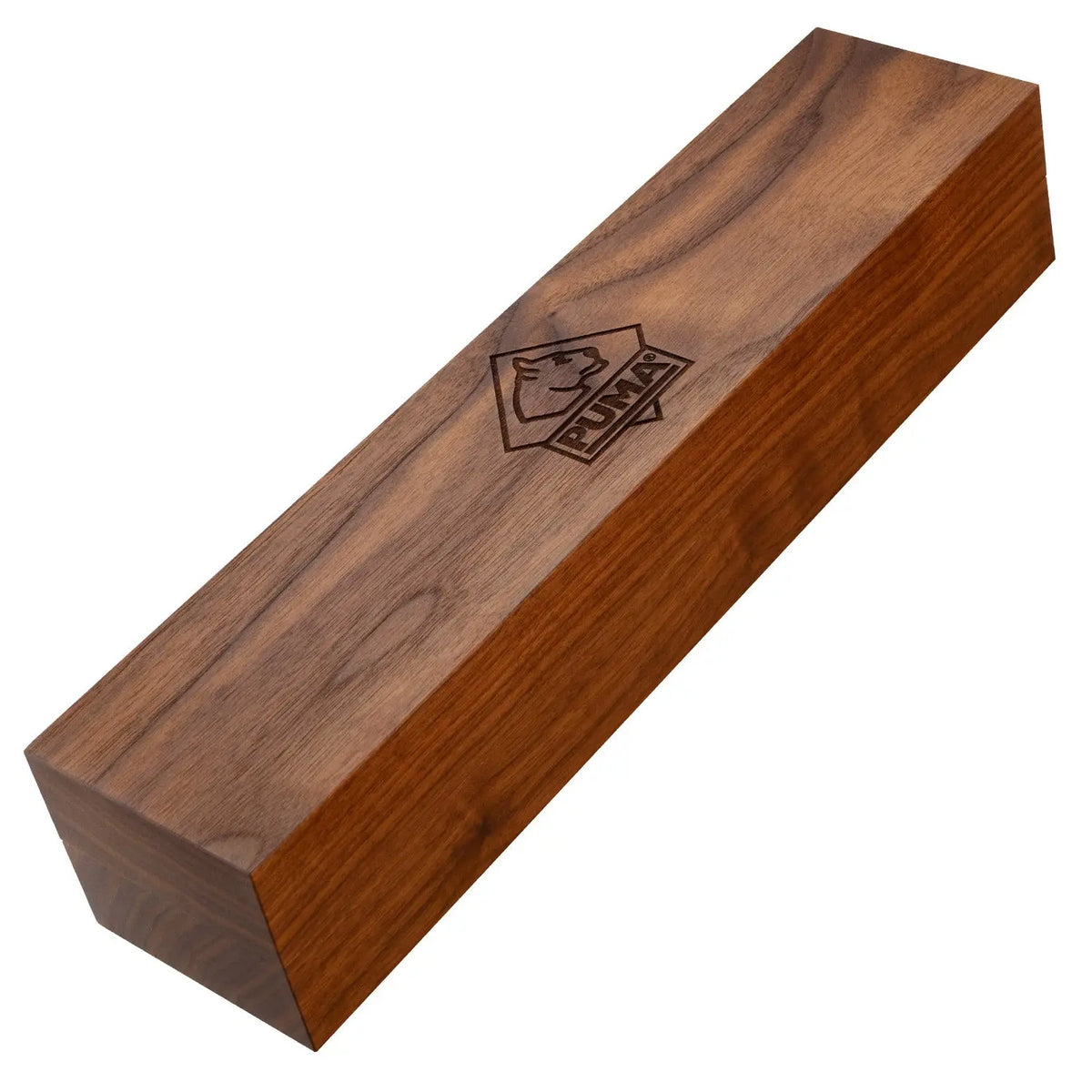

PUMA wooden gift box with magnetic closure, white hunter

PUMA leather sheath white hunter