Care & Sharpening

Proper Care and Sharpening of PUMA Knives

To ensure you can use your PUMA knife for a very long time, correct handling, regular maintenance and care, as well as proper resharpening of the edge, are of crucial importance.

a) Maintenance of PUMA Knives

  1. For knives stored for longer periods, blades can often be stiff to open. A drop of oil and opening and closing a few times usually remedies this.
  2. After use, clean off dirt and sweat – even under water, but then dry thoroughly. Never expose the knife to high heat: warping of handle scales, cracks in staghorn or wood due to shrinkage are inevitable consequences.
  3. Lightly rub the entire knife with gun oil, lightly oil the springs along their entire length, especially at the friction points.
  4. Never half-open two parts that move together on one spring at the same time. The spring will then be under double tension, overloaded, and could break.
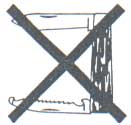
Schematische Darstellung der korrekten Messeröffnung mit einer Feder
Fig. 1: Correct handling of springs on folding knives

5. Sharpening the blade with PUMA honing steel (Art. No. 90 3574 / 91 3575). Honing on PUMA Arkansas oilstone (Art. No. 90 3576) and sharpening oil (Art. No. 90 3579).

6. Caution: The knife blade is purely a cutting tool. Striking, splitting, prying, or using it as a screwdriver will inevitably damage the edge.

b) Sharpening Instructions

Important: Never sharpen a knife on an emery stone. The blade can burn very easily and will need to be replaced.

Blade still wedge-shaped and thin – only honing required
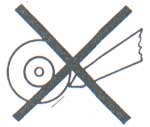
Schematische Darstellung einer dünnen, keilförmigen Klinge
Fig. 2: Wedge-shaped, thin blade – only honing needed

Use PUMA Arkansas oilstone (Art. No. 90 3576) and PUMA sharpening oil (Art. No. 90 3579). Thoroughly moisten the stone with sharpening oil and hold the knife at approximately a 30° angle to the surface.
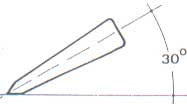
Darstellung des 30-Grad-Winkels beim Abziehen der Klinge auf dem Ölstein
Fig. 4: Knife blade at a 30° angle on the sharpening stone

Pull the firmly pressed blade towards you with its back laid to the right, obliquely against the edge. After two strokes, turn the knife and push away from you with its back laid to the left.
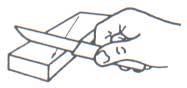
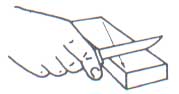
Erster Abziehschritt: Klinge auf sich zuziehen
Fig. 5: First honing step – pull blade towards you
Zweiter Abziehschritt: Klinge von sich wegziehen
Fig. 6: Second honing step – push blade away from you

Blade convex and thick – pre-grinding required

Schematische Darstellung einer balligen, dicken Klinge die nachgeschliffen werden muss
Fig. 7: Convex, thick blade – pre-grinding on the sharpening stone required

Use the PUMA sharpening stone (Art. No. 90 3578). Instructions:

  1. Thoroughly soak the sharpening stone with water before use. Keep the surface moist during sharpening.
  2. First, thinly abrade the blade on the coarse (light) side – press firmly until a distinct burr forms on the edge.
  3. Then hone on the fine (dark) side: hold the blade at a 30° angle, two strokes to the left and two to the right – until the edge is sharp.

c) Repairs

We cannot provide replacement blades or spare parts (excluding leather sheaths). As a customer service, we charge all repairs and sharpening work at cost.

Please observe all care instructions – your PUMA knife will thank you with a longer lifespan, good spring and locking device function, and excellent cutting performance.

Care & Sharpening

Proper Care and Sharpening of PUMA Knives

To ensure you can use your PUMA knife for a very long time, correct handling, regular maintenance and care, as well as proper resharpening of the edge, are of crucial importance.

a) Maintenance of PUMA Knives

  1. For knives stored for longer periods, blades can often be stiff to open. A drop of oil and opening and closing a few times usually remedies this.
  2. After use, clean off dirt and sweat – even under water, but then dry thoroughly. Never expose the knife to high heat: warping of handle scales, cracks in staghorn or wood due to shrinkage are inevitable consequences.
  3. Lightly rub the entire knife with gun oil, lightly oil the springs along their entire length, especially at the friction points.
  4. Never half-open two parts that move together on one spring at the same time. The spring will then be under double tension, overloaded, and could break.
Schematische Darstellung der korrekten Messeröffnung mit einer Feder
Fig. 1: Correct handling of springs on folding knives

5. Sharpening the blade with PUMA honing steel (Art. No. 90 3574 / 91 3575). Honing on PUMA Arkansas oilstone (Art. No. 90 3576) and sharpening oil (Art. No. 90 3579).

6. Caution: The knife blade is purely a cutting tool. Striking, splitting, prying, or using it as a screwdriver will inevitably damage the edge.

b) Sharpening Instructions

Important: Never sharpen a knife on an emery stone. The blade can burn very easily and will need to be replaced.

Blade still wedge-shaped and thin – only honing required

Schematische Darstellung einer dünnen, keilförmigen Klinge
Fig. 2: Wedge-shaped, thin blade – only honing needed

Use PUMA Arkansas oilstone (Art. No. 90 3576) and PUMA sharpening oil (Art. No. 90 3579). Thoroughly moisten the stone with sharpening oil and hold the knife at approximately a 30° angle to the surface.

Darstellung des 30-Grad-Winkels beim Abziehen der Klinge auf dem Ölstein
Fig. 4: Knife blade at a 30° angle on the sharpening stone

Pull the firmly pressed blade towards you with its back laid to the right, obliquely against the edge. After two strokes, turn the knife and push away from you with its back laid to the left.

Erster Abziehschritt: Klinge auf sich zuziehen
Fig. 5: First honing step – pull blade towards you
Zweiter Abziehschritt: Klinge von sich wegziehen
Fig. 6: Second honing step – push blade away from you

Blade convex and thick – pre-grinding required

Schematische Darstellung einer balligen, dicken Klinge die nachgeschliffen werden muss
Fig. 7: Convex, thick blade – pre-grinding on the sharpening stone required

Use the PUMA sharpening stone (Art. No. 90 3578). Instructions:

  1. Thoroughly soak the sharpening stone with water before use. Keep the surface moist during sharpening.
  2. First, thinly abrade the blade on the coarse (light) side – press firmly until a distinct burr forms on the edge.
  3. Then hone on the fine (dark) side: hold the blade at a 30° angle, two strokes to the left and two to the right – until the edge is sharp.

c) Repairs

We cannot provide replacement blades or spare parts (excluding leather sheaths). As a customer service, we charge all repairs and sharpening work at cost.

Please observe all care instructions – your PUMA knife will thank you with a longer lifespan, good spring and locking device function, and excellent cutting performance.