


The PUMA company history - Chronicle
The story of PUMA officially began in 1769 when Johann Lauterjung registered his trademark with the cutlers' guild. However, the manufacturer's tradition stretches back even further, to a time when numerous grinding workshops, known as "Kotten," lined the banks of the Wupper River. Here, blades were sharpened on natural sandstone grinding wheels powered by water.
At the beginning of the 19th century, there were exactly 93 grinding mills and six hammer forges along the banks of the Wupper River. It was only the invention of the steam engine that ushered in a new era in blade processing. Water power was no longer a factor.
One of the early cottages belonged to the Lauterjung family. Historical records of a legal dispute between the Lauterjung family and the fishery "at the castle" attest to this. In 1691, the Lauterjungs won the case against the fishermen's heirs and were henceforth permitted to use the lowest reaches of the Wupper River in Balkhausen. The Balkhausen cottage, now a living museum, still stands on the presumed site.

-
1855
His great-grandson Nathanael (1815-1865) moved the production to the nearby city of Solingen.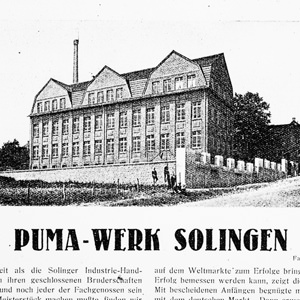
-
1876
His son Ernst Otto Lauterjung (1855-1931) also manufactured pocket knives, stilettos, sabers and hunting knives for the first time in an additional small factory.
- 1900
On May 26th, the name "PUMA-Werk, Lauterjung und Sohn" will be entered into the Solingen commercial register.
-
1920
The sons Eugen (1883-1961) and Franz (1888-1976) established a second factory in Solingen and boosted exports. As a result, "PUMA" was already internationally recognized as a mark of quality before World War II.
-
1936-1945
During World War II, production was subordinated to the war industry.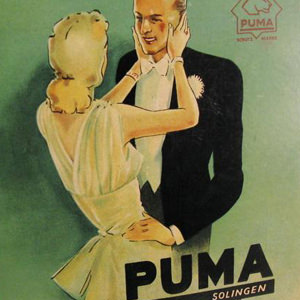
-
1946
Switch back to civilian production of pocket and household knives.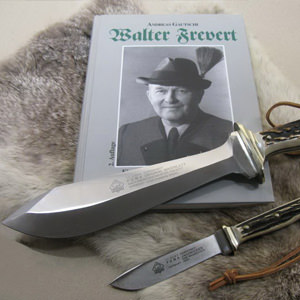
-
1953
Oswald von Frankenberg und Ludwigsdorf (1915-1986), husband of Renate Lauterjung, shifted production at the PUMA factory to functional hunting, fishing, leisure, and sporting knives. In collaboration with Chief Forester and hunting writer Walter Frevert, numerous PUMA classics were created (hunting set, hunting knife, hunting knife, universal hunting knife, and boar spear). Bloodhound handler Tassius designed the Rüdemann and Wildtöter knives.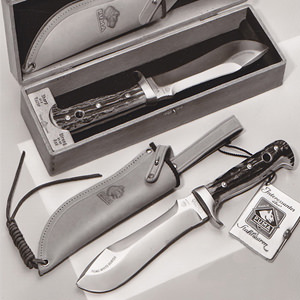
-
1956
PUMA is developing the White Hunter model for the East African Hunting Organisation.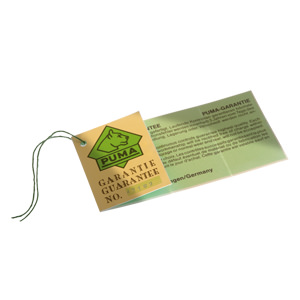
-
1964
Introduction of the PUMA numbering system. Each model receives its own test number with year of manufacture, including warranty booklet.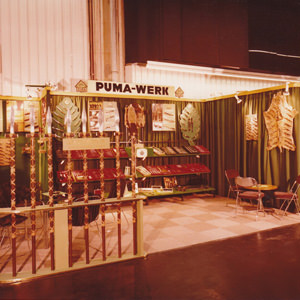
-
1967
Renate von Frankenberg takes over management of the PUMA plant. -
1986
Oswald von Frankenberg und Ludwigsdorf dies, leaving behind a highly profitable and internationally recognized company. -
1991
Sale of the factory to the Hindrichs family from Solingen. -
1995
Harald Lauer, who has been with the company since the late 1970s, becomes managing director of the PUMA plant. Under his leadership, new manufacturing methods, such as CNC machines and laser technology, are promoted.
-
1998
Sale to businessman H. Hiepass-Aryus and relocation to the modern headquarters in the Solingen district of "Auferhöhe".
-
2003
In addition to the classic line, PUMA offers its customers a series of high-quality utility knives in a modern design under the label "PUMA IP" (International Production). -
2008
With PUMA TEC, the company complements its knife range with economically attractive, fixed-blade and folding knives in a modern look.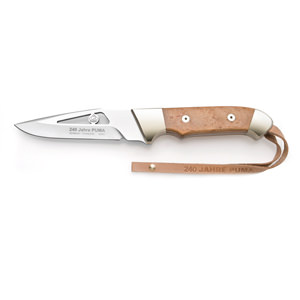
-
2009
PUMA is celebrating its 240th anniversary. To mark the occasion, new hunting and hunting pocket knife series are being created in the classic PUMA style, but modified according to the latest ergonomic findings.
-
2009 / 2010
With "PUMA Individual", an internet program in which the customer can independently and individually assemble their own original PUMA knife, the traditional Solingen company is once again creating a novelty in the industry.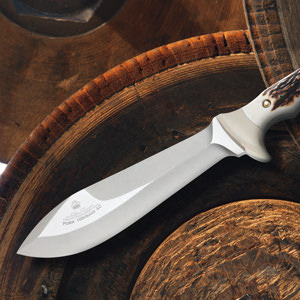
-
2015 The return of the classic after 40 years: In 1975, hp knoop developed the first "rüdemann" and "wildtöter" models for us. After 40 years, they were modernized and the design modified and are back in the PUMA range.
-
2017
Harald Lauer is retiring. Under the management of Heinrich-Ernst Hiepass-Aryus, Hendrik Hiepass-Aryus and Julia Nicolai are taking over the leadership of the traditional manufactory. The user-friendly, redesigned online shop is launching.
- In 2019, PUMA celebrated a quarter of a millennium of company history. 250 years of the "Solingen knife manufactory" – and the story continues.
- In 2024, PUMA celebrated 255 years of company history and won three knife awards with three different knives in three categories. PUMA - Award Winning Knives.
